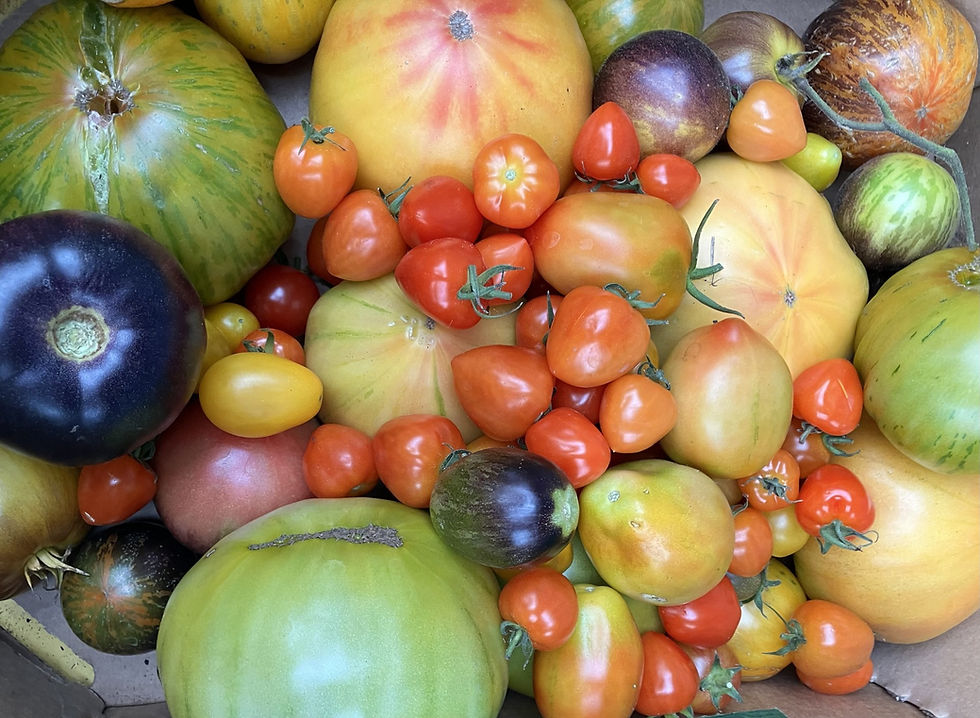
30 + Tomatoes

The Aztecs cultivated tomatoes from around 700AD. Cortes brought them to Europe in 1519. Originally, they were an ornamental plant - their resemblance to deadly nightshade put people off eating them. This wasn't helped when aristocrats served them on pewter plates and became ill after eating them. The acid from the tomatoes had leached the lead in the pewter and it was the lead that made people ill. The tomato got the blame and the name the 'poison apple'.
Tomatoes are high in vitamins C and K and copper. They are a good source of vitamins A, B1, B2, B3, B6, B9, E, potassium, manganese, magnesium, phosphorous, iron, zinc and fibre. Their phytonutrients are anti-oxidant, anti-inflammatory and support immunity, eye, skin and heart health. They contain lycopene which has been found to lower risk of prostate cancer. The bioavailability of lycopene and beta-carotenes (vitamin A precursors) increases with cooking.
Tomatoes can be eaten raw or stuffed or in salads or sandwiches. They can be roasted or made in to soup. They are a key ingredient in pasta sauces, on pizzas, in stews, curries, shakshuka, tagine, salsas, risottos, quiches and sauces. They can be made into chutney, jam or juice.


Comments